Hard Water Stain Removal in San Clemente
Sprinkler Spots That Won't Come Off — and What Works
Hard water stain removal in San Clemente starts with the source: sprinkler water at 14–17 grains per gallon. Vinegar can't touch silica. The right chemistry can.
Hard Water Stain Removal — Before & After
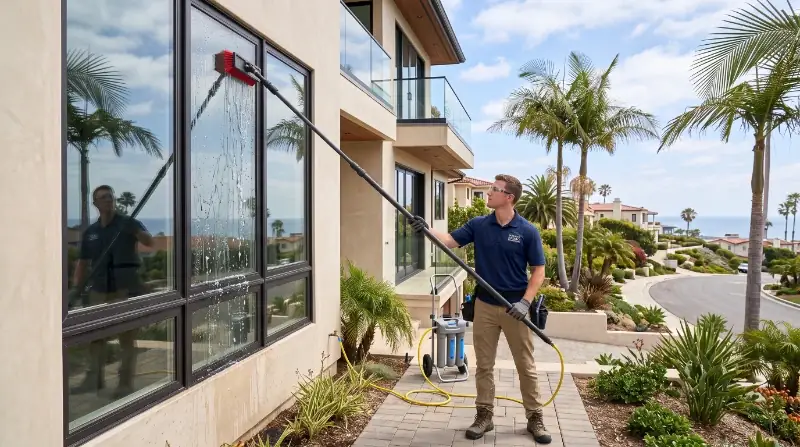
Mineral deposit removal — squeegee
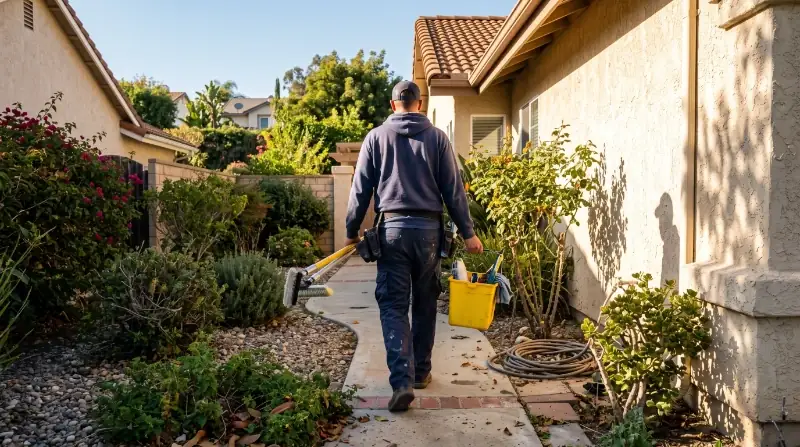
Track mineral buildup cleared
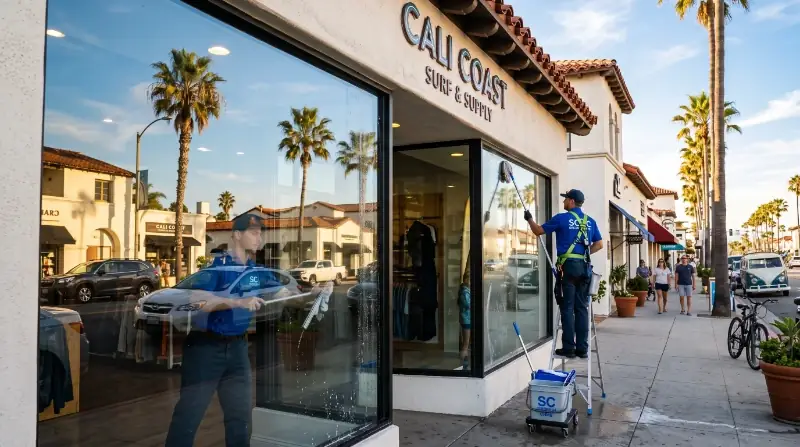
Slider door — ocean view home
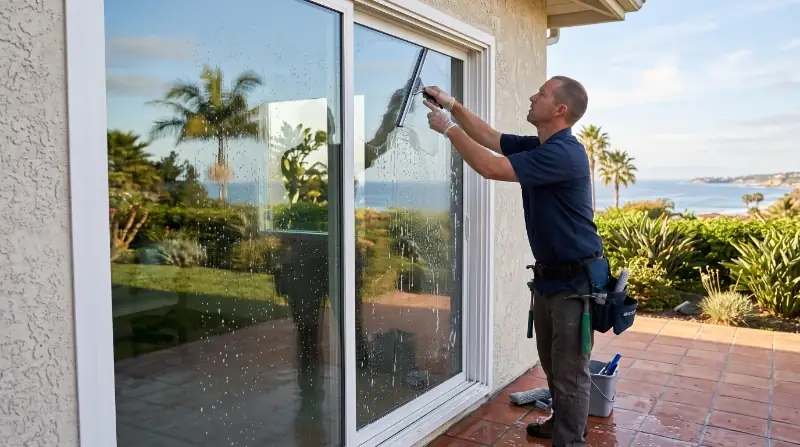
Frame and seal cleaning
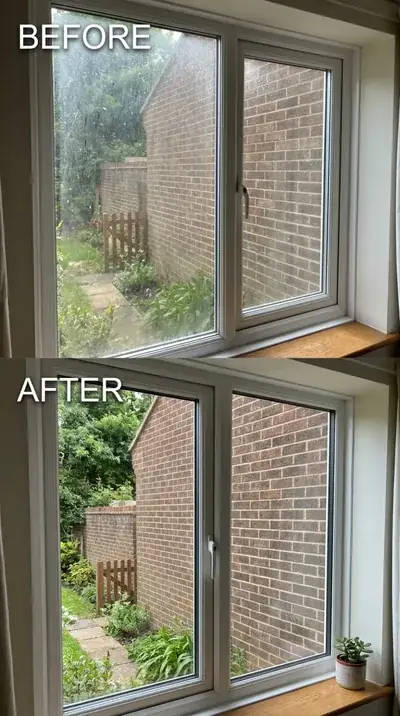
Irrigation spots — before & after
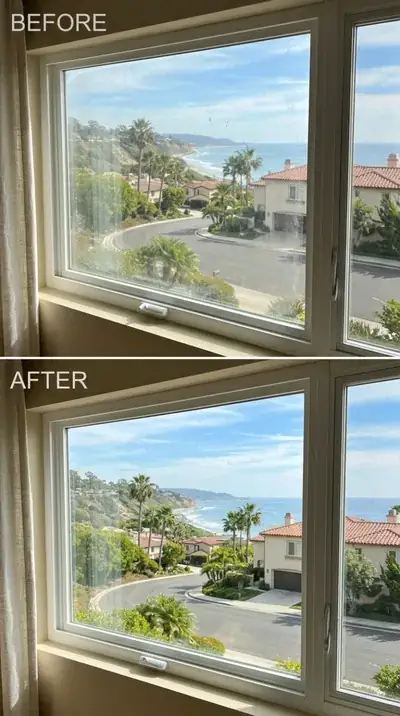
Salt + hard water removed
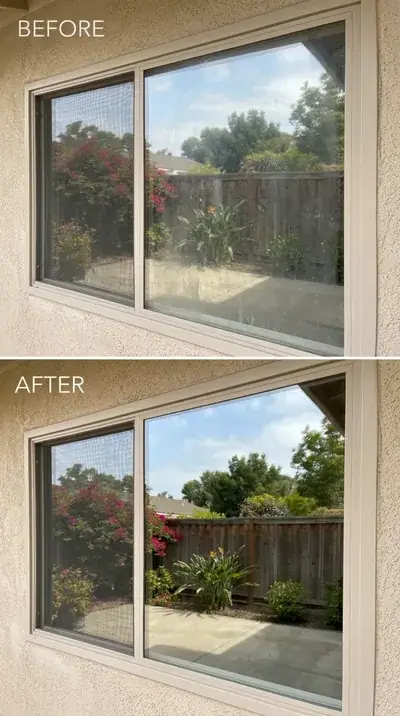
OC mineral removal
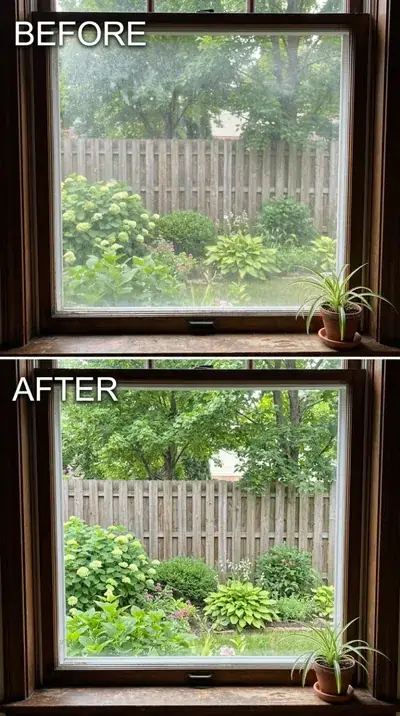
Treatment result
Why Hard Water Spots on Windows Keep Coming Back
Sprinkler water in San Clemente is hard enough to leave a thin layer of calcium and silica on your glass every time the irrigation runs. Vinegar does not remove silica. Standard spray cleaners don't either. The right mineral-dissolving chemistry does, applied at the correct pH and dwell time for your specific deposit type. We assess severity before quoting so you know exactly what to expect before anything starts. Clarity Coast is licensed and insured, and we use no harsh chemicals beyond what the deposit actually needs.
Most of San Clemente is on City water, and the City of San Clemente's 2025 water quality report lists two sources: treated Metropolitan Water District water at 14 gpg and water from IRWD's Baker plant at 17 gpg. Talega is the exception. It is served by Santa Margarita Water District, whose 2026 report gives a 15 gpg average with a range of 12.3 to 17.5 gpg. On the USGS scale, anything above 10.5 gpg counts as very hard, so every part of town is well past that line.
The problem is not the water in your pipes. The problem is where that water goes next. HOA irrigation systems in Talega, Forster Ranch, and Rancho San Clemente run on scheduled morning cycles during growing season, and sprinkler heads overspray windows regularly on properties where landscaping borders the structure. That hard water makes contact with the glass, the sun evaporates the water, and the minerals remain on the surface. One overspray cycle leaves a faint white spot. A full growing season of daily overspray cycles leaves a visible crust of calcium deposits. Leave that crust on the glass for many months and it can etch the surface, and etching is permanent.
A similar white film shows up on ocean-facing windows when marine layer moisture and sea spray dry on the glass overnight through May, June, and July. On a view home, that haze is the difference between a million dollar view and a blurry one. Inland, the same kind of dull layer comes from spring pollen and the fine dust Santa Ana winds leave each fall, which settles into fresh sprinkler spots and makes them look worse than they are.
Why vinegar does not work on established hard water deposits
Vinegar is a mild acid. On a sprinkler spot that showed up this week, it will often soften the calcium enough to wipe away. It does little to silica (silicon dioxide), the other major mineral that irrigation water leaves behind.
Silica requires professional mineral-dissolving chemistry at a pH matched to the specific deposit type. Using vinegar or any other household acid on established mineral deposits spreads the dissolving residue across the glass surface and can make the professional treatment that follows harder to apply correctly.
The same applies to store-bought sprays marketed as hard water removers. Most are made for bathroom tile and shower doors, not for the calcium-silica crust that builds up on exterior glass from irrigation overspray.
How Hard Water Stain Removal Works
Hard water treatment is one component of professional window washing in San Clemente CA. See our full 5-step process to understand how mineral assessment fits into every visit, and the cleaning frequency guide to see why regular visits keep deposits from building into etching.
Deposit assessment before anything starts
We evaluate the deposit type and severity before quoting a treatment visit. Sprinkler deposits and salt film from sea spray and coastal haze are different materials and need different treatment. The age of the deposit matters too: one season of buildup responds differently than three. If the glass surface itself has been altered by years of untreated mineral buildup or by previous abrasive cleaning attempts, we tell you that honestly before starting a treatment that cannot reverse surface damage.
Treatment with the correct mineral chemistry
We carry mineral-dissolving compounds matched to the deposit type specific to San Clemente's water supply. The chemistry is applied at the concentration and dwell time the deposit needs, not one product on one timer for every window. For windows with both irrigation hard water deposits and ocean salt mineral film, the treatment sequence addresses both deposit types separately.
Full window wash with deionized water to finish
After treatment, the windows get a full exterior cleaning with deionized water (zero dissolved mineral content) through a water-fed pole, so the rinse does not leave new minerals on the treated surface as it dries. The glass dries streak-free, and we wipe the tracks and sills while we are there. This is the step most DIY attempts miss: rinsing with San Clemente tap water after removing hard water deposits starts the next deposit cycle right away. If you want the interior glass done too, we clean inside and out on the same visit.
Preventing the next buildup cycle
We discuss the source of the deposits with you after treatment. If the source is HOA irrigation overspray hitting the glass on a daily cycle, that overspray will continue producing new deposits regardless of how well today's treatment worked. In some cases, adjusting sprinkler head direction or timing makes a larger practical difference than cleaning frequency. We are not going to recommend a cleaning schedule that benefits us if a sprinkler adjustment benefits you more. Where the overspray can't be moved, a quarterly deionized rinse usually keeps new spots light enough to come off in one pass.
Hard Water Stain Removal — Common Questions
Can hard water stains be removed from San Clemente windows?
Yes, in most cases. Deposits from one or two seasons of irrigation overspray are typically removable in a single treatment visit with the correct mineral-dissolving chemistry. Deposits that have been present for several years, or that have been repeatedly attacked with vinegar or abrasive cleaners, may have caused changes to the glass surface itself that limit how much clarity can be restored. We assess this honestly before quoting a treatment. We don't take payment for a result we can't deliver. On a typical Talega slider with two seasons of spotting, the before and after difference is night and day, and the room gets its natural light back.
How much does hard water stain removal cost in San Clemente?
Hard water treatment is quoted separately from standard window washing based on deposit severity, the number of affected windows, and the deposit type. Treatment runs $150 to $350 in addition to the standard cleaning visit, and a single-story home with one or two seasons of irrigation buildup usually sits toward the lower half. Heavy deposits across many large windows land at the top of that range. The deposit assessment before we start is included with the window washing quote at no extra charge.
Will the hard water stains come back after treatment?
If the source of the deposits (irrigation overspray or marine layer moisture) keeps hitting the glass after treatment, new deposits will form. Treatment removes what has accumulated. It does not seal the glass against future buildup. The best way to slow the return of spots is deionized water cleaning on a regular schedule, since a rinse with city tap water leaves new minerals every time it dries. Pair that with redirecting any sprinkler head that hits the glass directly.
What neighborhoods in San Clemente have the worst hard water staining?
Talega and Forster Ranch see the heaviest hard water buildup because HOA irrigation systems in those neighborhoods run on daily scheduled cycles, and landscape design on many properties places sprinkler heads within range of exterior glass. Rancho San Clemente properties with mature landscaping close to the structure also see this regularly. Beachfront properties near the Pier Bowl have a different issue, salt film left by marine layer fog, but the visual result on the glass is similar: white film that does not respond to standard cleaning.
Does vinegar remove hard water stains from windows in San Clemente?
Not reliably on established deposits. Vinegar can lift some fresh calcium spotting if you catch it early. It does little to silica, which is the other main mineral in sprinkler deposits. For spots that have built up through more than one season of irrigation overspray, professional mineral chemistry matched to the deposit type is required. Using vinegar on established deposits spreads the softened residue across the surface and can make subsequent professional treatment more difficult.
Does vinegar clean glass better than Windex for hard water stains?
Neither product removes established hard water stains from San Clemente windows. Vinegar is better than Windex on fresh calcium spots, and that is useful in the first few days after a sprinkler overspray. What vinegar cannot do is touch silica (silicon dioxide), which sprinkler water leaves behind alongside the calcium. Once silica has built up over many irrigation cycles, an acid rinse just spreads softened residue across the surface. Windex is a general surfactant cleaner made for dust and fingerprints. It is not formulated for mineral deposits and does almost nothing to calcium-silica crust. The right answer for built-up hard water deposits is professional mineral-dissolving chemistry at the correct pH and dwell time for the specific deposit type.
What should you not use to clean windows with hard water stains?
Do not use abrasive scrubbing tools; that is the most damaging mistake on San Clemente glass. Paper towels, scouring pads, steel wool, and razor blades used dry on mineral deposits create micro-scratches in the glass surface, and those scratches are permanent. Once scratched, glass scatters light differently, making the haze look worse after cleaning than before. The second most common mistake is rinsing treated glass with tap water, which the City of San Clemente's 2025 report puts at 14 to 17 grains of hardness per gallon. If you rinse treated glass with tap water and let it air dry, you have started a new deposit cycle before the old one was finished. The correct rinse after any hard water treatment is deionized, 0-TDS water, so the rinse leaves nothing behind as it evaporates. Commercial tile descalers are also a problem on exterior glass: they are pH-balanced for bathroom grout and ceramic, not tempered or laminated glass, and they can damage low-e coatings on energy-efficient windows.
What are common window cleaning mistakes for hard water stains in San Clemente?
The common window cleaning mistakes for hard water stains start with waiting. Hard water deposits from irrigation overspray get thicker with every cycle. Fresh spots from last week are much easier to remove than spots from last year, and mineral deposits left on glass for many months can etch the surface. Etching is permanent. The next mistake is treating hard water stains as purely cosmetic: once the glass is etched, cleaning cannot reverse it, and replacing a large etched pane usually costs far more than years of regular cleaning. A third mistake, specific to coastal San Clemente, is ignoring the salt air and marine layer side of the problem. Properties near the Pier Bowl and along PCH deal with two deposit types at once: hard water from irrigation and salt film from ocean fog and sea spray. Those require different chemistry and often need to be treated in sequence. A single product cannot address both effectively.
Related Window Washing Information
Other Services in San Clemente
Most San Clemente homeowners bundle these with a window wash. One quote, one visit.
- Window screen cleaningsalt and grime out of the mesh
- Track and sill cleaningpacked salt, stuck sliders
- Pressure washingdriveways, patios, walkways
- Commercial window washingstorefronts and offices
- Window cleaning before sellingpre-listing glass, screens, tracks
- Post-construction window cleaningcement haze, paint, labels
- Hard water damage on windows in Orange Countydistrict-by-district hardness data
- Hard water stain removal in Dana Pointocean-view glass and sprinklers
- Hard water stain removal in San Juan Capistranoinland heat bakes spots on
- Talega hard water windowswhy HOA sprinklers spot glass
Related guide
- Hard Water vs Soft Water: What It Means for Your Windows — how a softener changes indoor water but does nothing for sprinkler spots on the glass.
Get a Hard Water Assessment for Your San Clemente Home
Tell us your neighborhood and how long the spots have been there. We'll give you an honest answer on whether treatment will restore full clarity, plus a clear price before anything starts.
Call +1 (949) 883-1300Monday through Saturday, 8am to 6pm