Our Window Washing Process in San Clemente
5 Steps, Pure Water, Zero Residue
Our window washing process has 5 steps: pure water pre-rinse, water-fed pole scrub, 0-TDS final rinse, tracks and screens, then a walkthrough before we leave.
What Professional Window Washing Looks Like
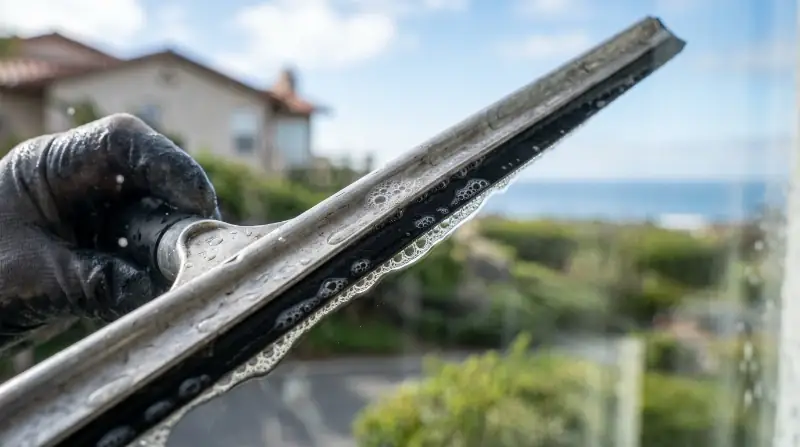
Water-fed pole — deionized water
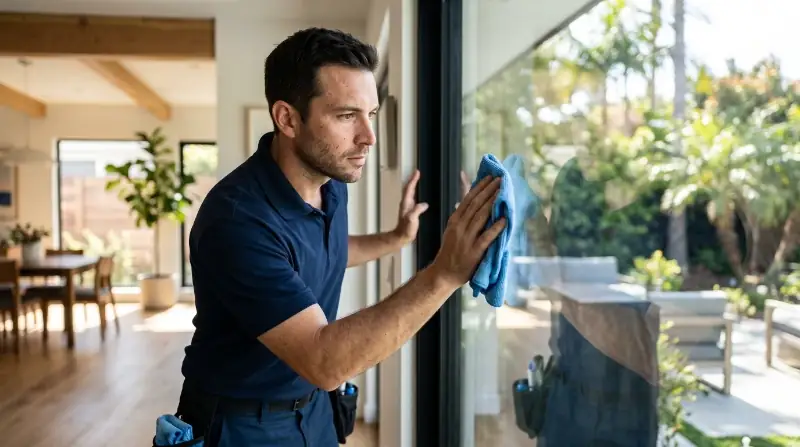
Streak-free technique

Sill and track detail
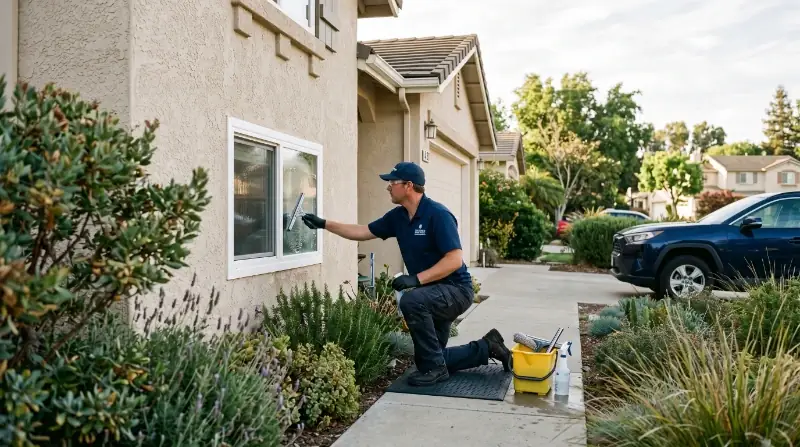
Professional-grade equipment
What Do Professional Window Washers Use to Clean Windows?
Professional window washers on the San Clemente coast should use deionized water, also called pure water or 0-TDS water. That means zero total dissolved solids, so there is no calcium or magnesium left to dry on the glass. The City of San Clemente's 2025 water quality report puts city tap water at 14–17 grains of hardness per gallon. Rinsing coastal glass with that water leaves fresh minerals behind as it dries, on top of the salt air film, coastal haze and hard water stains already there.
Because there's nothing dissolved in it, deionized water evaporates without leaving a white ring or a haze that shows up when the afternoon sun hits the pane. The water-fed pole feeds it through the brush head the whole time the bristles are working, so dirt is carried off the glass instead of drying back onto it.
Window Cleaning Steps, in Order
Pre-rinse with pure water
Every exterior cleaning begins with a pure water pre-rinse of deionized, 0 TDS water. This isn't tap water; it has been filtered and run through deionization resin until no dissolved minerals remain. The pre-rinse loosens salt film, sea spray, dust and seasonal pollen. It also shows up any calcium deposits from irrigation overspray that need separate treatment, so they're identified and priced before scrubbing begins, not after.
Water-fed pole brush scrub
The water-fed pole is the main tool on coastal glass. Its soft brush head scrubs each pane while a steady flow of deionized water rinses the loosened dirt away. The pole reaches most second-story exterior glass from the ground, so there are no ladders leaning on your stucco or trim. On an ocean-view home this is the step that matters most for the million dollar view: the bristles break up the film the marine layer leaves overnight, and the pure water carries it off the glass.
Final 0-TDS rinse
After scrubbing, every window gets a final rinse of 0 TDS deionized water. This last pass flushes away anything the brush loosened and leaves only pure water on the glass, which dries without spots. It's how the finish comes out streak-free with no harsh chemicals, which also makes it an eco-friendly method around gardens, pools and pets.
Track, sill, and screen detail
This step covers the glass inside and out plus the tracks and sills, screens and frames. Tracks are dry-cleared first, before any water touches them. San Clemente's onshore wind packs window tracks with sand and coastal grit, and wetting it first turns it into an abrasive slurry that can scratch glass. That's the step most people skip when they clean their own windows, and it explains the fine scratches that show in low sun after a DIY job. Tracks get vacuumed and hand-detailed dry. Then screens come off, get washed flat, dried and reinstalled. Sills and frames get wiped. Interior panes are done by squeegee and microfiber.
Final inspection walkthrough
Every visit ends with a walkthrough of every window, screen and track, and you're welcome to walk it with the pro. Anything not up to standard gets fixed on the spot instead of on a callback or at the next visit. A streak, a missed edge or a screen not seated in its spline is handled right then. This happens on every job, whether or not you ask for it.
How Do Professionals Wash Windows Without Leaving Streaks?
Streak-free results on coastal glass come from two things: the right water and the right sequence. Deionized, 0 TDS water has no minerals to leave behind, while San Clemente tap water dries into visible spots and haze. That difference is the foundation.
The sequence matters just as much. Tracks must be dry-cleared before any wet cleaning, because wetting coastal grit before removing it creates a scratching compound. The water-fed pole brush delivers a continuous flow of pure water that rinses contaminants away from the glass surface rather than pushing them across it. The final 0-TDS rinse leaves nothing to dry into a streak. Side by side, the before and after usually shows up most on south- and west-facing glass, where low afternoon sun used to light up every spot.
How the same five steps change through the year
The steps never change order, but the time spent on each one does. From May through July, the marine layer leaves a damp film on coastal glass most mornings, so the brush scrub in step 2 takes longer on ocean-facing panes. After the Santa Ana winds blow through in fall, tracks and sills fill with fine dust, and step 4 can take as long as the glass itself. Inland homes in Talega and Forster Ranch on a quarterly schedule usually need more attention in step 1, where the pre-rinse shows how much sprinkler spotting has built up since the last visit. Either way, the result you should see is the same: clear glass and more natural light in the rooms behind it.
If something is missed
Every visit ends with a walkthrough, and anything that doesn't meet your standard is addressed before the pro leaves. Clarity Coast matches you with vetted local window washing pros who are licensed and insured in California, and the price is confirmed before booking.
Related Pages
Other Services in San Clemente
Most San Clemente homeowners bundle these with a window wash. One quote, one visit.
- Window screen cleaningsalt and grime out of the mesh
- Track and sill cleaningpacked salt, stuck sliders
- Pressure washingdriveways, patios, walkways
- Commercial window washingstorefronts and offices
- Window cleaning before sellingpre-listing glass, screens, tracks
- Post-construction window cleaningcement haze, paint, labels
- Deionized water window cleaning explainedthe science behind step 3
Related guides
- Hard Water vs Soft Water: What It Means for Your Windows — the case for a pure water rinse over a home water softener.
- Salt Air Window Damage: Coastal California Guide — the four stages of salt damage and when it becomes permanent.