Hard Water Stain Removal in Dana Point, CA
Assess first, treat second, rinse at 0 TDS
Hard water stain removal in Dana Point starts with a close look at your glass, not a spray bottle. Imported water, salt air and sprinklers each leave a different mark.
How hard is the water in Dana Point?
Dana Point's tap water is hard, and some of its imported supply tests very hard by the USGS definition. The city is served mainly by South Coast Water District, with part of Dana Point served by Moulton Niguel Water District, and both rely on imported water from the Metropolitan Water District. Moulton Niguel Water District's 2023 water quality report gave a district average of 13.3 grains per gallon.
That average hides a wide spread. In the same Moulton Niguel report, water from the Diemer treatment plant averaged 9.3 grains per gallon, with a range of 5.7 to 12.8, while water from the Baker plant averaged 17.3 grains, ranging from 16.45 to 18.7. For reference, the USGS hardness scale draws its very-hard line at 180 mg/L, which works out to 10.5 grains. One grain per gallon equals 17.1 mg/L, so a 17-grain day means close to 290 mg/L of hardness minerals riding on every sprinkler drop. Those calcium and magnesium deposits are the white rings you see once the drop dries.
We have not been able to confirm a published hardness figure for South Coast Water District, so we do not quote one. The honest summary is that Dana Point's imported supply usually falls somewhere in the 9 to 17 grain band reported by neighboring districts. A desalination project near Doheny State Beach, cleared by the California Coastal Commission in October 2022 at a planned 5 million gallons a day, may shift the supply mix later. For now, every Dana Point window should be treated as if it is getting very hard water.
Why hard water spots on windows show up first on ocean-view glass
The glass you care about most is usually the glass that spots worst. In Dana Point, the big view windows face west or south toward the water, which also means they take the strongest afternoon sun. Water that lands on hot glass evaporates fast, and everything dissolved in it stays behind as a white ring. On a home with a million dollar view, that is a frustrating trade: the panes that frame the ocean are the ones the sun bakes spots onto.
Terraced lots make it worse. Many hillside homes, especially around Monarch Beach, have irrigated planters stepping down the slope right below the view windows. A sprinkler head aimed a few degrees too high hits the lower third of the glass on every cycle. Over a season, that turns into a band of haze at the same height across the whole wall.
Salt and minerals together
Coastal glass rarely has just one problem. Through May, June and July, the marine layer leaves a damp film on windows overnight, and that film carries salt. Bluff lots get a second dose from sea spray on big swell days. When sprinkler water hits glass already coated by salt air, the salt and the calcium dry together into a tougher crust than either would form alone. That combination is why hard water spots on windows near the coast often ignore a simple vinegar wipe that would work on an inland bathroom mirror. In fall, Santa Ana winds add a layer of canyon dust on top, and once the next sprinkler cycle wets it, that grit sets into the mineral crust.
The four stages from spot to etch
Hard water damage is a timeline. Where your glass sits on it decides what treatment can achieve.
- Fresh spots. Light white rings that appear within days of overspray. Mostly calcium carbonate, still sitting on top of the glass. Easy to clear.
- Bonded spotting. After repeated sprinkler cycles, silica joins the calcium and grips the surface. Vinegar softens the calcium but leaves the silica, so the ring stays.
- Scale and haze. Spots merge into a cloudy band that people often mistake for coastal haze. The glass looks dirty even right after a regular wash, and natural light scatters through it instead of coming straight in.
- Etching. Spots left six months or longer can start to eat into the glass itself. The surface is no longer smooth, and minerals are no longer the only issue.
Run a fingernail lightly across a spot. If it feels raised, there is still mineral on top. If it feels smooth but still looks white, the glass may already be etched.
Can you remove water spots from glass yourself?
You can remove fresh water spots from glass yourself if you catch them early. White vinegar on a microfiber cloth will dissolve calcium carbonate that has only been there a few days. Once silica has bonded, home remedies stop working, and some of them cause harm.
What to skip: razor blades used on dry glass, steel wool, scouring pads, magic erasers and any powder cleanser. All of them can leave fine scratches that look worse than the spots once the sun hits them. Avoid rinsing with the garden hose after you clean, too. Dana Point tap water simply lays down a fresh layer of minerals as it dries.
If a spot survives two careful vinegar passes, leave it alone and book an assessment. Repeated acid wiping on bonded silica tends to smear residue across the pane, and it makes the true condition of the glass harder to read.
What hard water stain removal in Dana Point involves
Every visit starts with an assessment, and the treatment only happens after you approve the price. Here is how professional hard water stain removal in Dana Point runs from start to finish. The work is done by licensed and insured local pros, which matters when mineral-dissolving products are used near stone sills and painted trim.
- Assessment. The pro checks each affected pane, notes whether spots are fresh, bonded or etched, and looks for window film or coatings that change what can be used.
- Test area. A small corner of the worst pane is treated first so you both see what the glass will look like after. On spotted view glass, the before and after on that test corner is usually plain to see without stepping up to the pane.
- Mineral treatment. A mineral-dissolving product matched to the deposit is worked into the glass by hand, with the right dwell time for how bonded the spots are.
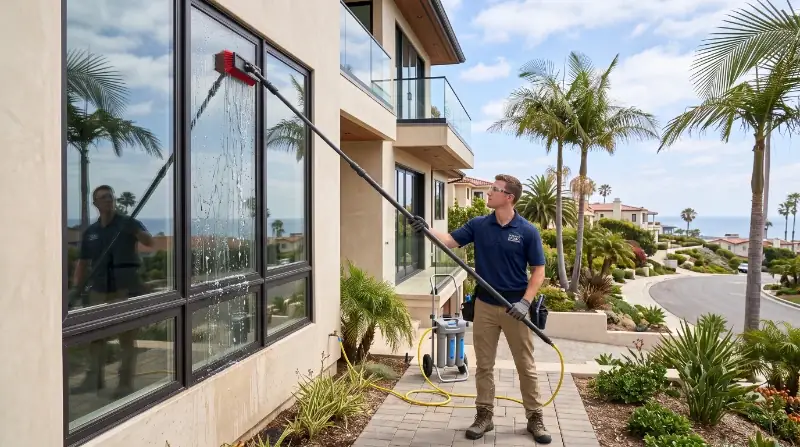
- Pure water rinse. The glass is rinsed with deionized water at 0-TDS, so nothing new dries back onto the treated surface. A water-fed pole carries that rinse to upper-story panes, so treated glass on the second floor dries just as clean.
- Full wash and walkthrough. The rest of the visit follows the normal 5-step process, covering glass inside and out, screens, and tracks and sills, then you check the treated glass in daylight with the pro.
The deionized rinse is the step most people skip at home. Water with nothing dissolved in it cannot leave anything behind as it dries. Our explainer on deionized water window cleaning covers how the resin strips minerals out of the rinse water. The rinse is also eco-friendly, since nothing but purified water runs off into your planters, and it leaves the treated pane streak-free.
How much does hard water stain removal cost in Dana Point?
Hard water stain removal in Dana Point adds $150 to $350 to a regular window wash. Where you land depends on how many panes are affected and how bonded the spots are. The assessment is part of every visit, and the treatment price is confirmed before any work begins.
A home with spotting on one sprinkler-facing wall usually sits near the low end. A large home with years of buildup across walls of glass and railings will sit higher. The full breakdown, including base prices by home type, is on the Dana Point window washing cost page.
When can't hard water damaged glass be saved?
Glass cannot be fully restored once it is deeply etched. Treatment removes minerals sitting on the surface, but it cannot rebuild glass that minerals have already eaten into. Heavy etching, usually from spots left in place for many months, can leave a permanent haze even after the deposits are gone.
The same goes for glass scratched by earlier attempts with blades or abrasive pads. Removing the minerals can actually make old scratches easier to see. Your pro will tell you during the assessment if a pane is past the point where treatment helps, before you pay for it. For a deeper look at the stages of damage and when replacement makes more sense, read the Orange County hard water damage guide.
Stopping the spots from coming back
Treatment clears what is there. It does not stop new spots, because the sprinklers keep running. The cheapest fix is often a sprinkler head adjustment: lower the arc, turn the head away from the house, or swap a spray head for drip line in beds that sit right against the glass.
Timing helps too. Run irrigation early in the morning, before the sun reaches the glass, so the few drops that do land have a chance to run off instead of baking on. Then keep a regular wash schedule. A 6 to 8 week cycle on oceanfront and bluff-top glass, or 8 to 10 weeks a little farther back, catches spots while they are still in the fresh stage. A quarterly wash, the usual inland rhythm, lets three months of sprinkler cycles stack on the glass, which is long enough here for spots to bond.
If you are seeing the same pattern on a San Clemente rental or a family member's place, the San Clemente hard water stain removal page covers that city's water. Everything else your visit includes is on the Dana Point window washing page, and you can always start at the Clarity Coast homepage.
More Questions About Hard Water Stain Removal
Will a water softener stop spots on my windows?
Usually not. Most homes do not run their irrigation lines through a softener, so the sprinklers still spray hard water. Softened water also still carries dissolved salts that can leave residue as it dries.
Will the winter rain wash hard water spots off?
No. Dana Point gets around 12 inches of rain a year, mostly from November to March, and rain does not dissolve bonded silica. It can rinse loose salt, but white mineral rings stay put.
Which side of my house will have the worst spots?
The side that gets the most afternoon sun and sits closest to sprinkler heads. On most Dana Point view homes, that is the ocean-facing wall, especially the lower third of each pane.
Is the treatment safe on tinted or coated windows?
The assessment checks for window film and coatings first, because they change which products and tools can be used. Most aftermarket film sits on the inside of the glass, while hard water spots form on the outside.
Can glass railings be treated for hard water spots?
Yes. Frameless deck railings often catch overspray from nearby planters on both faces. They are assessed and priced the same way as windows.
More for Dana Point Homeowners
- Hard water vs soft waterWhy softeners rarely fix window spots
- Marine layer window damageSalt film from summer fog
- Window washing in Capistrano BeachSurf spray and bluff glass
- Hard water removal in San Juan CapistranoInland heat and blended water
- Talega irrigation and hard waterHow HOA sprinklers spot glass
- Book an assessmentPrice confirmed before treatment
Get your Dana Point glass assessed
Tell us which windows are spotted and how long the spots have been there. Call (949) 883-1300, Monday to Saturday, 8am to 6pm, for a straight answer on what treatment can do for your panes.